Single-source timber
Rails, legs and racetrack for one table come from the same billet, so the grain runs continuously around the rail instead of jumping at every joint. Off-cuts become the chip tray and card shoe.
Consulat Nanterre is a small workshop and private poker club atelier. We design and build tournament-grade card tables from rare hardwood billets — walnut burl, Macassar ebony, olive ash, wild cherry — and press matching clay-composite chip sets with your club's own artwork. One cabinetmaker, one finisher and one chip artisan stay with your project from first sketch to the day the felt is stretched.
Tell us what you are building — a club floor, a single heirloom table, or a chip set for a private league. A cabinetmaker replies by email within two working days with sketches and a wood availability list.
Consulat Nanterre began as a private card room where the host grew tired of folding tables and plastic chips. What started as one walnut table for eight friends became a full atelier: a timber store, a finishing room and a chip press, run by people who play the game they build for.
We do not warehouse mass-produced frames and reskin them. Every commission starts with a conversation about the room, the light, the elbows around the rail and the way your club actually plays — then we open the timber store and choose the boards together.
Most poker tables are assembled from identical flat-pack parts and finished in a spray booth two continents away. Ours are drawn, cut, pressed and polished by the same small team — and we can tell you which tree each rail came from.
Rails, legs and racetrack for one table come from the same billet, so the grain runs continuously around the rail instead of jumping at every joint. Off-cuts become the chip tray and card shoe.
Our chip artisan mixes clay composite, presses the mould and applies inlays on site. Edge spots, club monograms and tournament denominations stay under one roof — and under one quality standard.
Speed cloth tension, rail height and cup placement are set to competitive-room standards, then tested with a full nine-hand session before anything leaves the workshop.
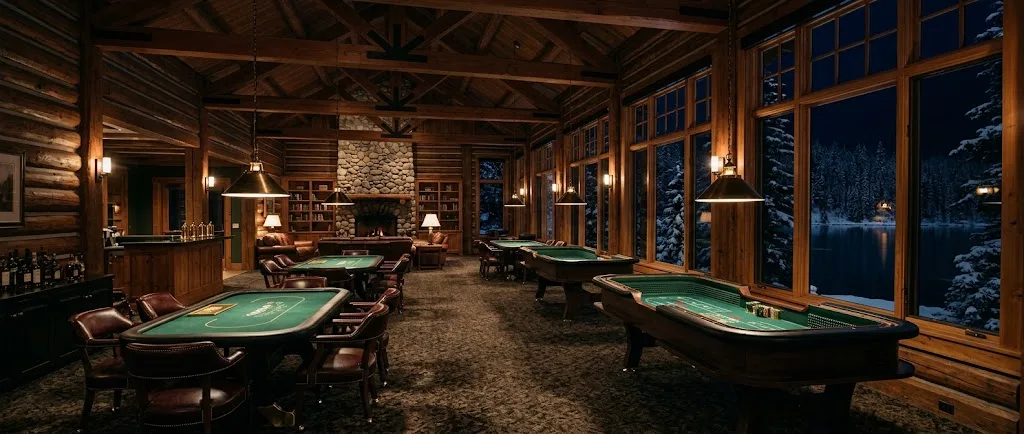
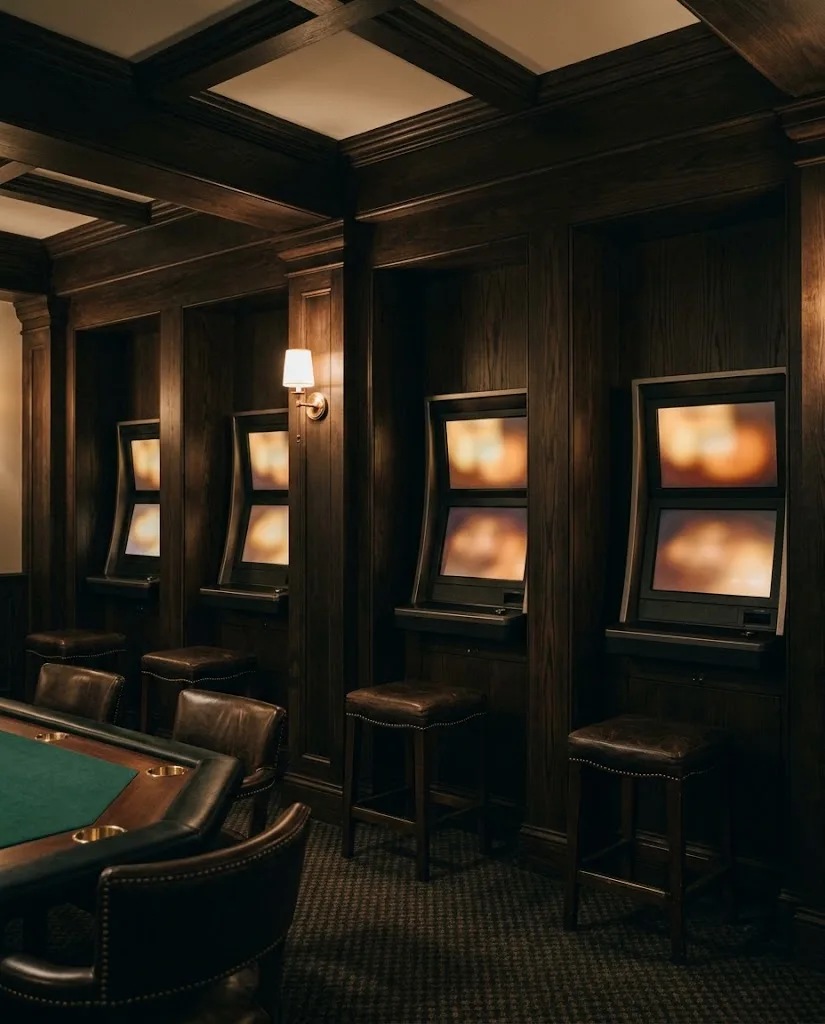
For club fit-outs we plan dealer circulation, seat spacing, lighting temperature and acoustic softening, so a room with four tables still feels calm at full occupancy.
Cloth wears and wood moves. Every table we build can come back to the bench for re-felting, rail re-wrapping and finish renewal — for as long as the table exists.
Each build ships with a signed record card: species, origin of the boards, moisture readings, finish schedule and the initials of everyone who worked on it.
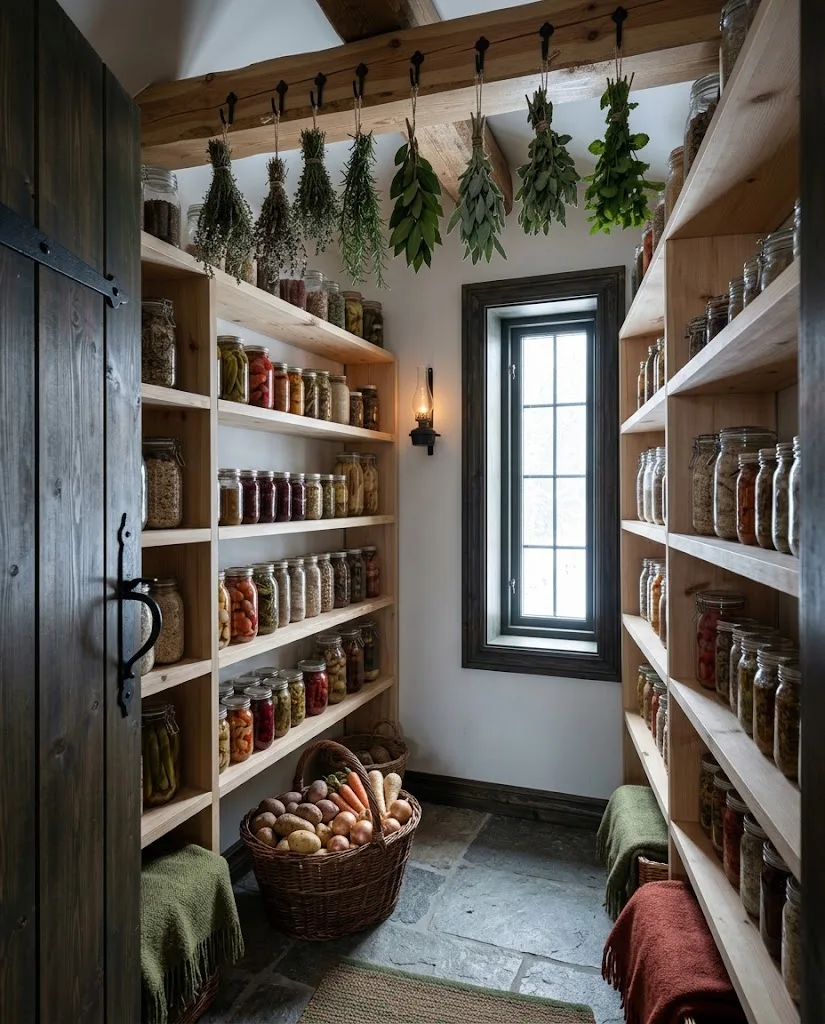
We buy small, rare lots — storm-fallen, salvaged or sustainably harvested — and rest them in the workshop until they are stable. Below are the species most often chosen for rails and racetracks.
Chocolate figure with swirling burl clusters. The classic club rail — warm under the forearm and forgiving with age.
Near-black with amber stripes. Reserved for statement tables where the rail should read as a single dark ribbon.
Dense, honey-toned and wildly figured. Salvaged from retired groves, so no two rails are ever alike.
Starts rose-gold and deepens to russet over the first years of play — a table that visibly records its own history.
Pale, luminous and three-dimensional under low light. Ideal for rooms that need brightness without gloss.
Fumed to a deep grey-brown with visible medullary rays. The most robust choice for high-traffic club floors.
A table sets the room; the chips set the ritual. We press clay-composite chips with a satin surface that stacks cleanly, riffles without clatter and keeps its edge after thousands of hands.
A commission usually runs between ten and sixteen weeks. Nothing is rushed, and you see the work at every stage — photographs from the bench land in your inbox each Friday.
We talk through the room, the seat count, how your club plays and how the table should feel at 3 a.m. You receive hand sketches and a shortlist of species.
You choose the actual boards — in person or by video walk-through of the timber store. Moisture is checked and the billet is reserved under your name.
The frame is joined, the rail bent and wrapped, the cloth tensioned. In parallel, your chip mould is cut and the first press samples are approved.
We install on site, level the table, hand over the record card, and book the first care visit. Refinishing support then stays open for life.
Each family is a starting geometry, not a fixed product. Seat counts, rail profiles, cup types, dealer positions and inlay work are decided during your consultation.
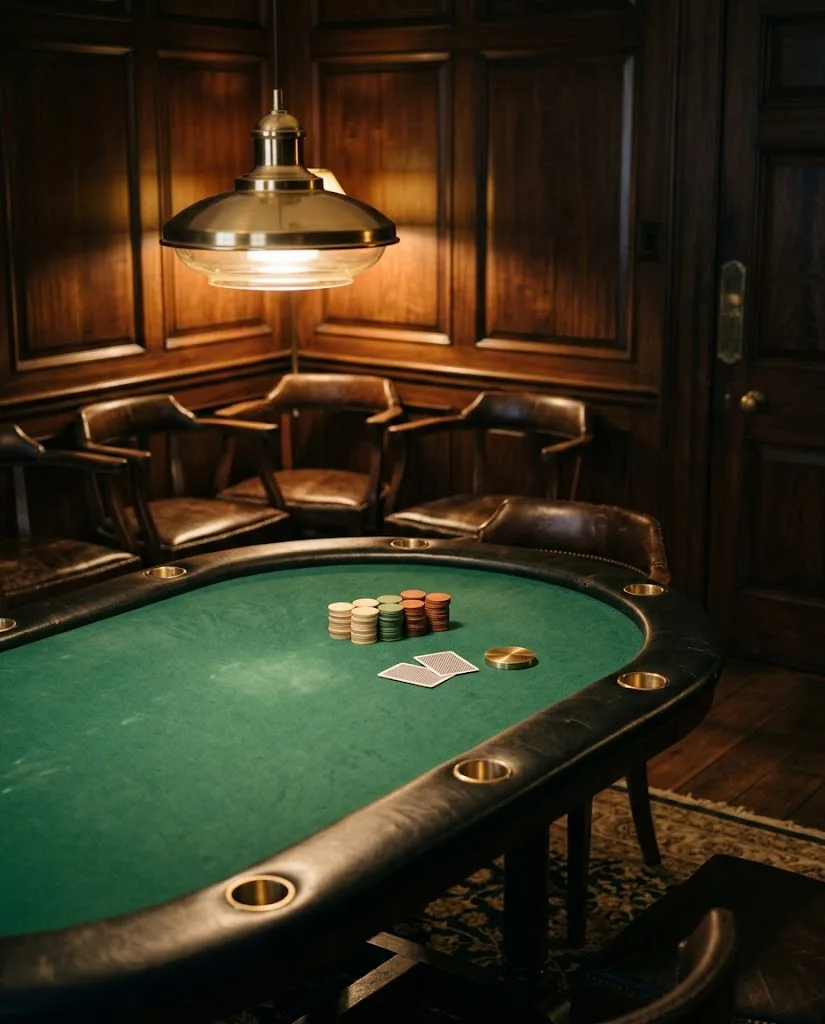
Our reference build: a 2.4-metre oval with a dealer notch, recessed drink wells set below rail level and a racetrack wide enough to rest a forearm through a long final table. Solid hardwood rail over a shock-absorbing core.
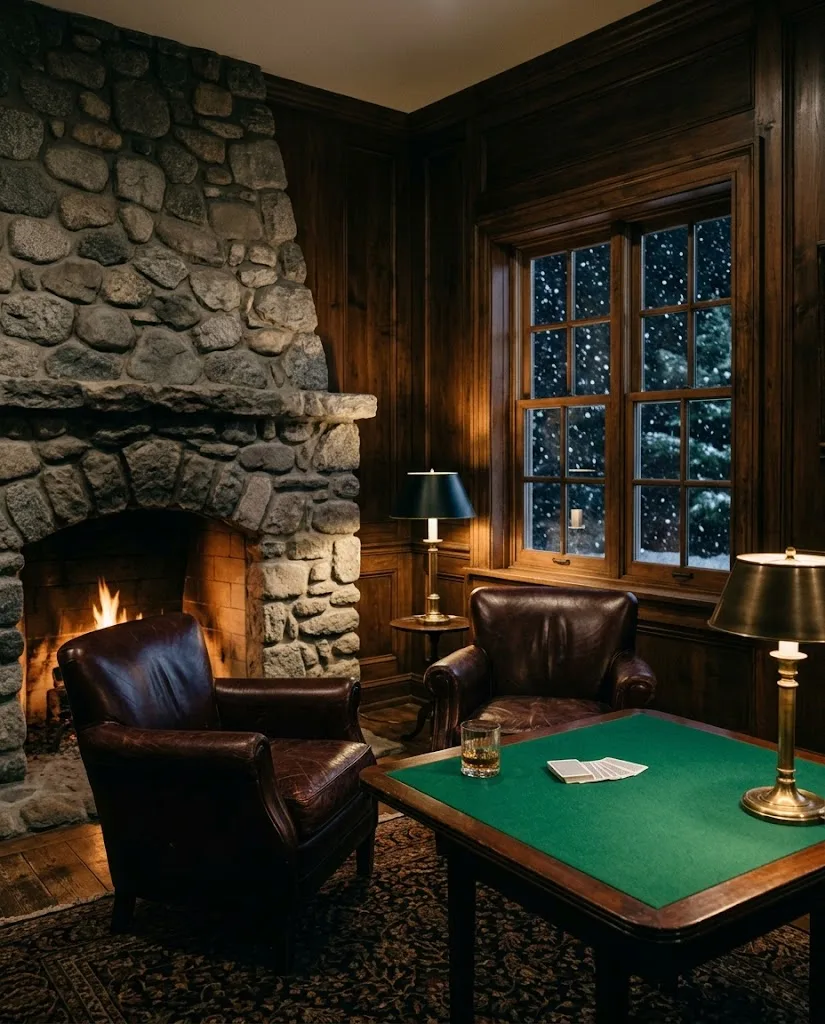
An eight-seat round build for rooms where conversation matters as much as the cards. A reversible top converts it to a dining surface, so the table earns its place between game nights.
A compact two-player table for studies and small apartments, with a lift-off top and a lower cabinet that stores chips, decks, cut cards and a dealer button in fitted trays.
Matched multi-table programmes for private clubs and hotel card rooms: consistent rail height and finish across every table, with numbered seat plaques and a shared spare-parts kit.
The rail is one unbroken piece of walnut and you can feel it. After a year of weekly games there is not a single lifted seam, and the cloth still plays as fast as day one.
They rebuilt our whole card room — six matched tables, one finish batch. Guests notice the consistency before they notice anything else about the space.
The chip set is the part I did not expect to love. Our monogram is pressed into the clay, not printed on it, and the stacks sound right in the hand.
Write to us with a few photographs and rough dimensions. We reply by email with an honest read on what the space can take, which species suit it, and how long the work would run.
All fields are required. We answer every message from a real person at the bench.
Book a consultation and we will walk the timber store with you, board by board, until the right one is standing under the light.